A two-day anti-bullying workshop for Grades 8–10, built at Atlas SkillTech University with the Going to School NGO. Two days that move a classroom from silent suffering to active intervention — from bystanders to upstanders.
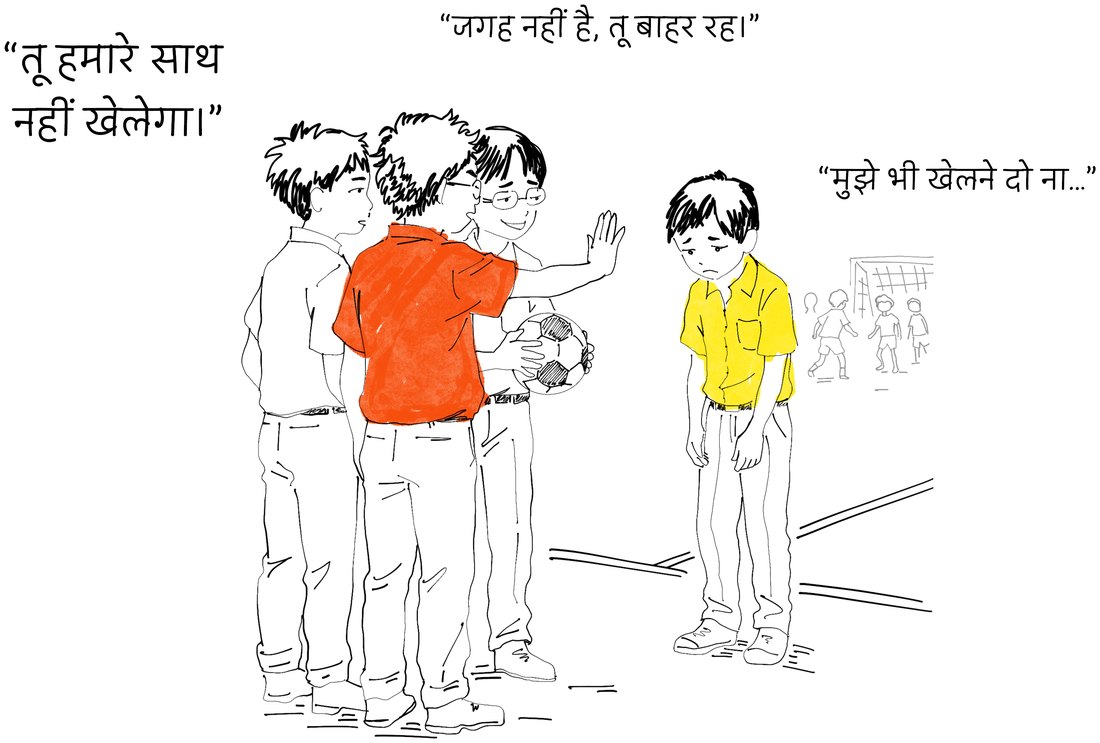
It happens in corridors, classrooms and lunch areas — in front of everyone.
Most bystanders freeze. Not because they don’t care, but because they don’t know how to act and the social cost feels too high. In India the behaviour is routinely written off as teasing, or as a rite of passage that toughens children up.
Every incident has the same cast — someone doing it, someone it is being done to, and everyone else watching.
The third group is by far the largest, and the one almost no anti-bullying programme speaks to. It became the audience for everything that followed.

The most critical finding wasn’t emotional, it was physiological. When a student feels unsafe the amygdala takes over, prioritising safety above cognition. That state physically blocks information retention.
Bullying isn’t only a wellbeing problem sitting next to education. It is an education problem. Learning cannot happen in a state of fear.
What Indian schools already do is punish the bully. What almost none of them do is repair the culture. Counsellors exist but are overworked and stigmatised, and there is close to no active intervention — no way for a student to raise a safety concern without putting their name on it.
Under-reporting is held in place by two things: fear of being seen as a snitch, and the belief that this all toughens you up. The gap we set out to close runs between silent suffering and active intervention.
We took the work to Going to School, an NGO that empowers children and youth through creative learning, storytelling and skill-building — a mission that lines up with the brief almost exactly.
The issue sits at the intersection of two goals rather than inside one. SDG 3 — Good Health and Well-being is the primary alignment; SDG 4 — Quality Education is the secondary one, because a school that isn’t safe cannot be a school that teaches.
The problem isn’t empathy. It’s language.
No lecture, at any point. The whole thing is built out of live skits, a competitive group game and reflective activities, so that bullying arrives as something students witness and navigate every day rather than as an abstract issue.
Facilitators act out a verbal bullying scene in front of the class. A student volunteer is invited to clap whenever something feels wrong, pausing the scene in real time. The class then points out what they noticed and why it felt uncomfortable.
Nobody raises a hand in the scene. No fight happens. Something is still wrong, and it is exactly the something everyone has learned not to take seriously. Students already know when a line has been crossed — they just need permission to say it out loud.
Seven scenes were scripted, one for each kind of bullying the research kept turning up.
A facilitator plays the victim of verbal bullying and a student volunteer is invited to mock them. In round one the facilitator reacts with visible hurt and discomfort. In round two — same situation, same words — the facilitator responds with calm and confidence.
The contrast is immediate and clear: confidence takes away the power of verbal bullying.
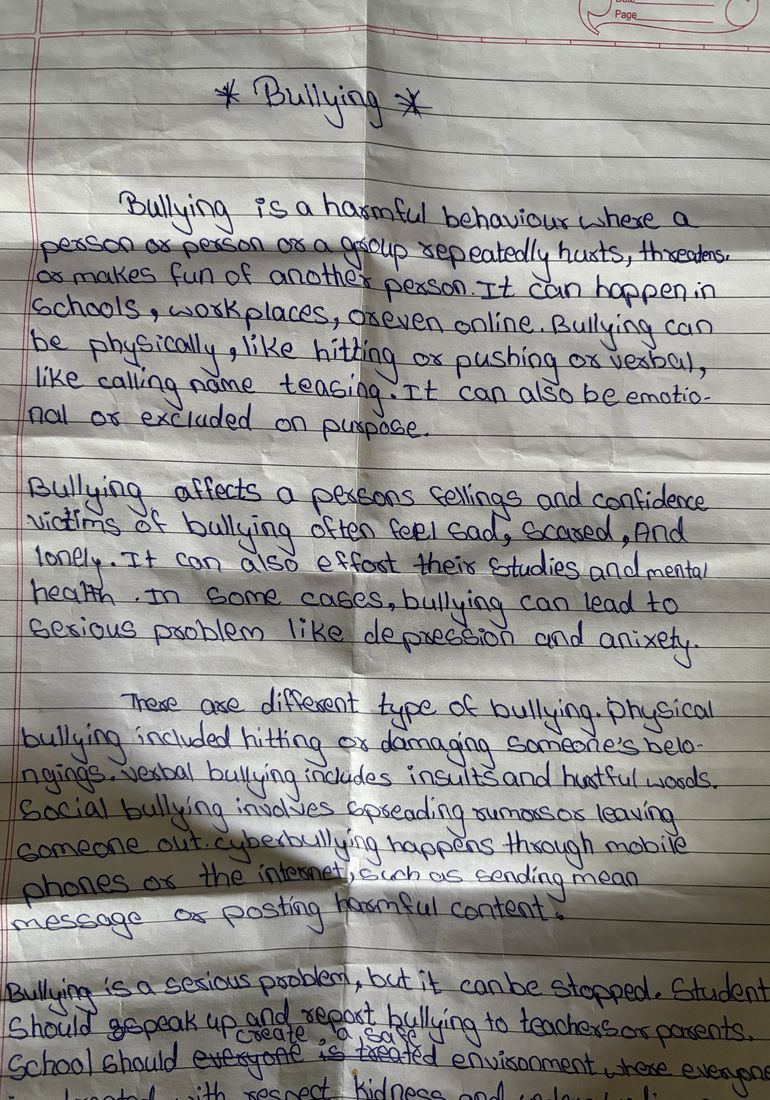
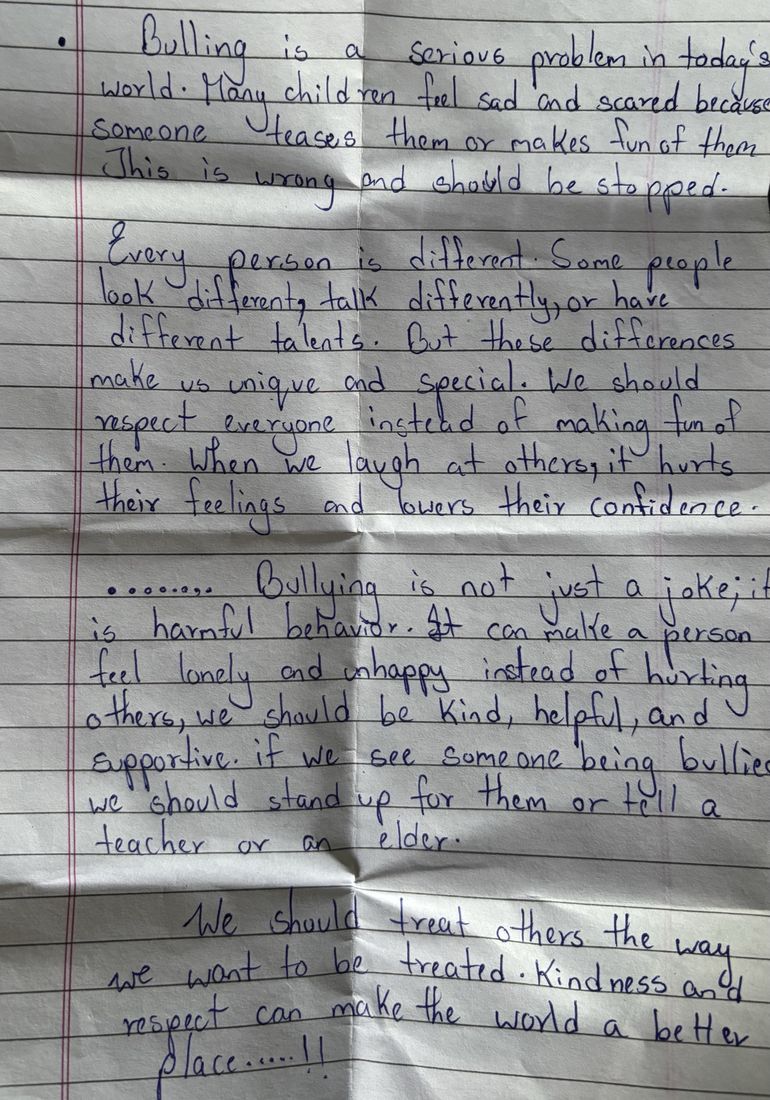
Students anonymously write one thing they have witnessed or personally experienced — no names, no pressure. It gives every student a private, safe voice, especially those who would never speak up in a group setting, and it is the closest thing in the room to the anonymous reporting route the research found missing everywhere else.
The chits go into a box that stays sealed until Day 2.
Fifteen scenarios, fifteen solutions. Each student receives one illustrated card: some show a bullying scenario, others show a possible reaction to it. Students move around the room, interacting with each other to find the card that best matches theirs — connecting a situation with an appropriate response.
As they discuss and decide their pairs, they begin to understand how different reactions influence the outcome of a situation. Once matched, each pair briefly shares their scenario and why the reaction fit — interactive and reflective without feeling like a formal lesson.
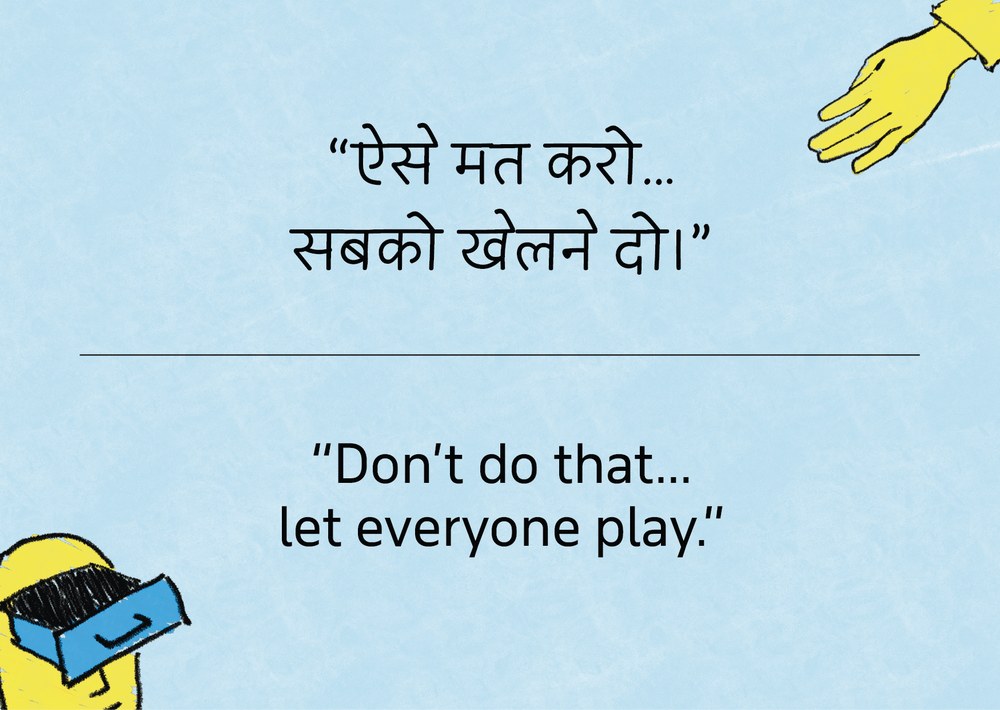
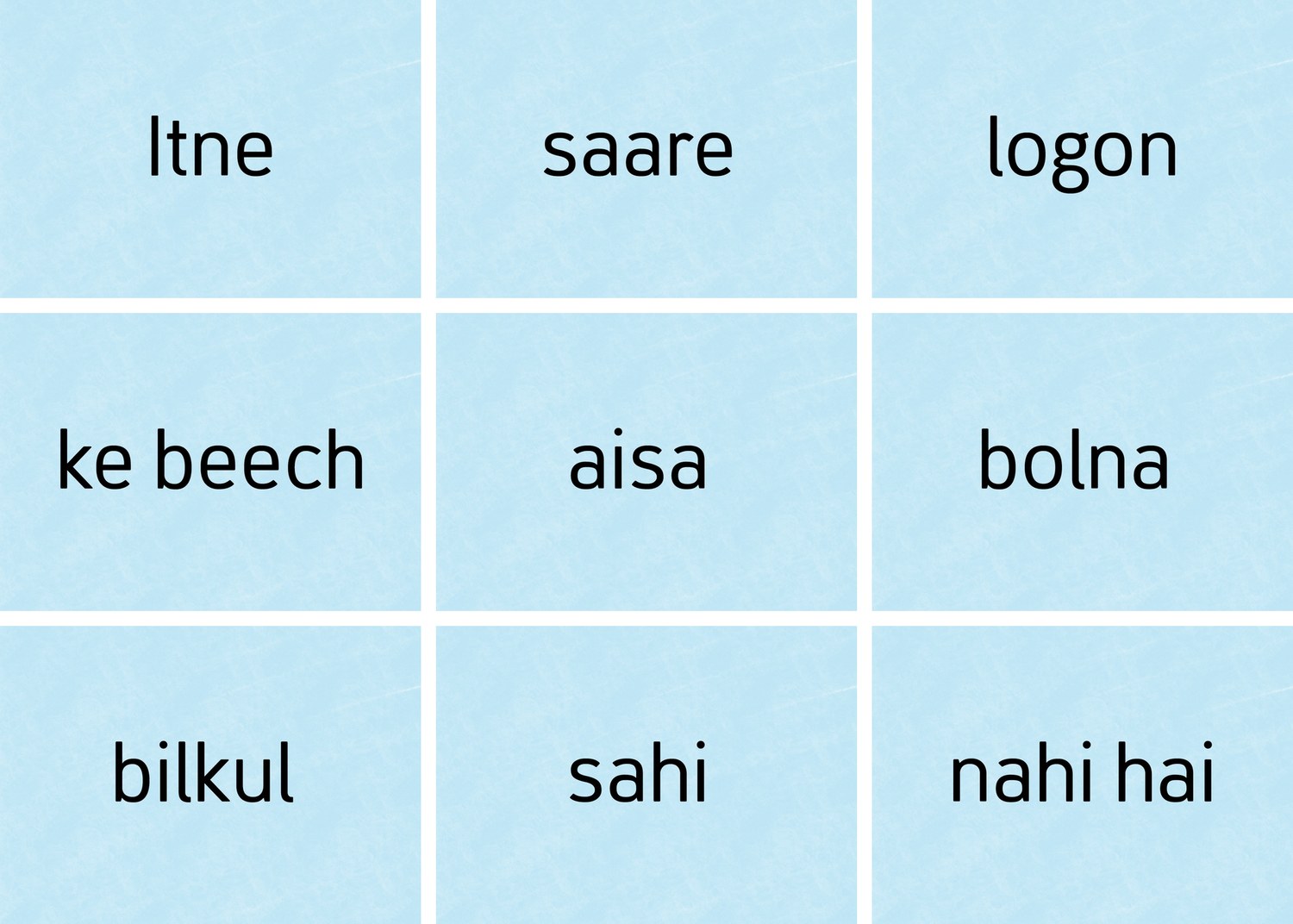
The centrepiece of Day 2. Two facilitators perform a bullying scene and freeze at the critical moment. Each group of students receives a sealed packet of jumbled word cards with a possible bystander response hidden inside.
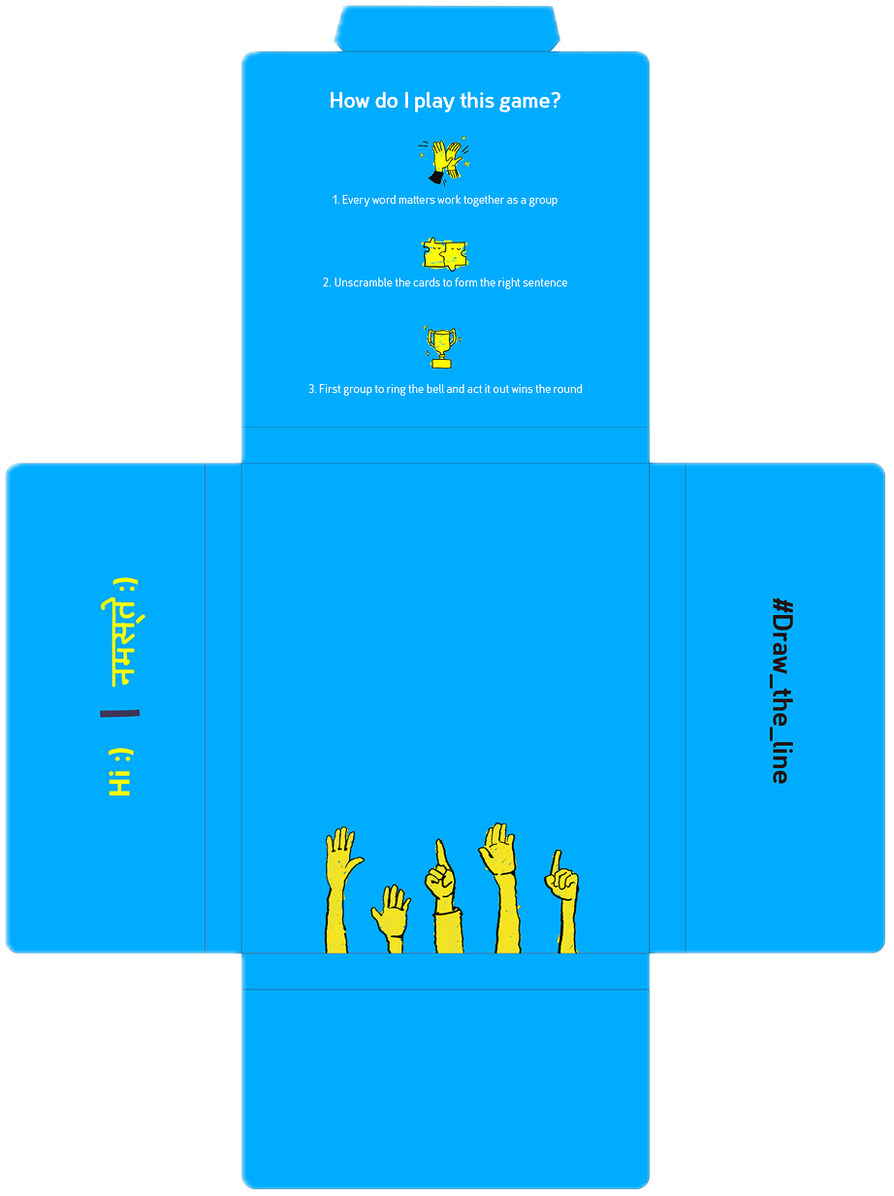
Groups race to unscramble the sentence, ring the bell, and act it out in front of the room. First group to do it correctly wins the round.
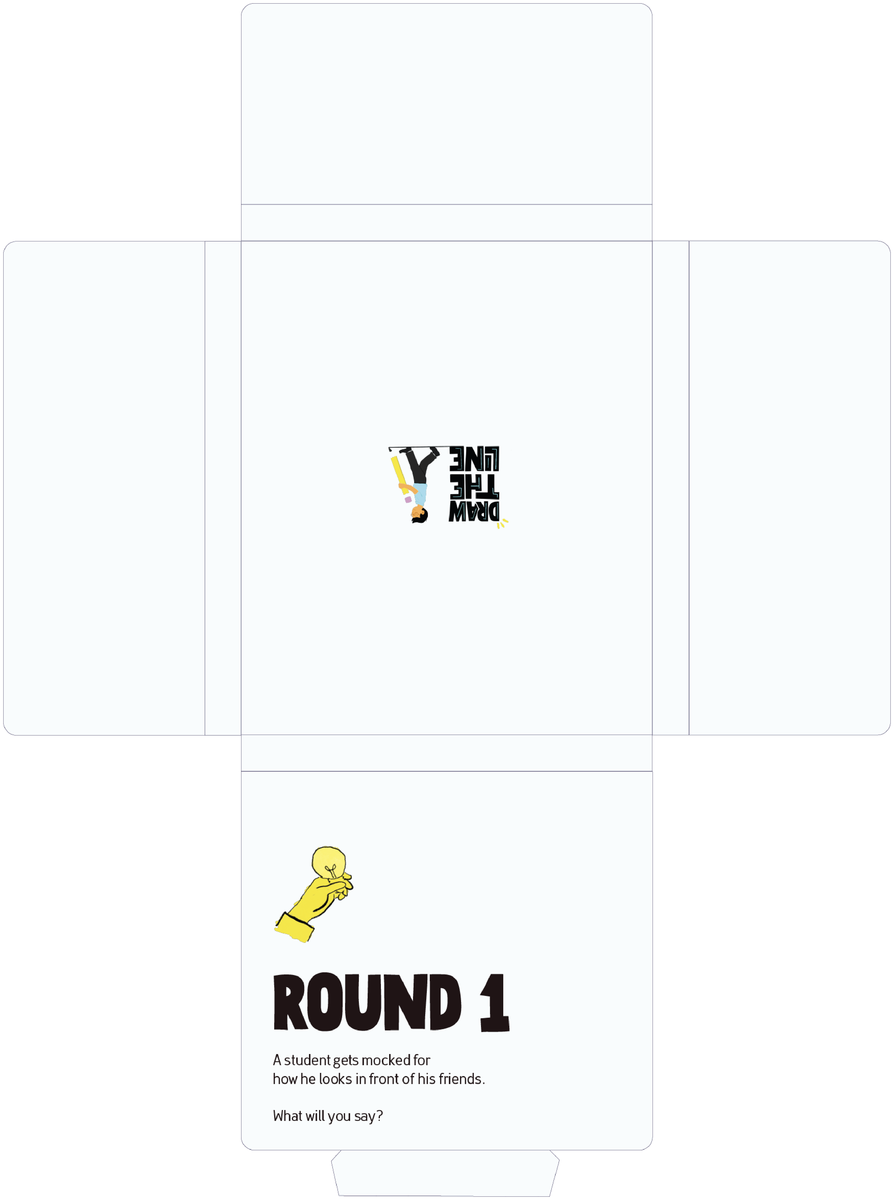
Each group receives a sealed packet at the start of every round. Inside are small cards — one or two words per card — that together form a bystander response sentence.
All the sentences are in conversational Hindi, written to sound like something a real student would actually say in that moment. The packet is a single folded sheet, printed and cut in-house, one per round. The prompt prints on the front panel; the rules and the campaign hashtag print on the reverse.
Both days were facilitated with a live class — five of us in the room, performing the skits, running the rounds and handing out the packets we had printed the night before.