A human-first operating system for everything a newsroom does before publishing — the layer between the field and the desk that no existing tool was built to hold.
News is not written. It is assembled.
Our starting point was Khabar Lahariya — a rural, women-led newsroom where Dalit women report on their own communities. Not representation, but ownership of narrative. What stayed with us from Writing With Fire wasn’t journalism, it was persistence: reporting in local languages, covering hyperlocal realities, navigating risk, caste and power.
A story breaks at 7:42 PM. A reporter sends a voice note. It gets forwarded, rewritten, verified, and by morning it is the newspaper in your hands. Every story moves across roles before it becomes public — through people, coordination, decisions and constant pressure. So what does a newsroom actually need to function, especially in the field?
Reporters, editors and bureau staff across The Times of India, Hindustan Times, NDTV, Deshabhimani and regional Marathi desks. We weren’t evaluating tools — we were watching how work happens under pressure.
A story begins as fragments. The challenge is not capturing data, it is making sense of it.
Who do you coordinate with? What can you decide independently?
Where does work slow down? What depends on informal systems?
How does information arrive? How much is usable vs fragmented?
Who knows where you are? What risks are managed individually?
What continues to happen outside official tools?
“We use WhatsApp.” “Calls take time.” “We lose files.” Underneath: coordination is fragmented, information is scattered, and time is lost in transitions.
Field reporters resist adopting new newsroom technology, preferring informal but fragmented methods. Existing tools prioritise publishing, control and output management — they assume structured information already exists before it enters the system.
There is no structured layer between field input and publishing. Newsroom coordination depends more on human workarounds than on system intelligence.
The problem isn’t effort. It’s structure.
Scored against Nielsen’s ten heuristics, plus field-reporter coverage and critical gaps. Every system performs well after a story is structured — publishing, layout, analytics, desk operations.
The research and the audit landed on the same weaknesses, independently.
No structured capture of what a reporter sees first
Coordination support is thin or absent
Little real-time awareness across roles
Minimal risk-awareness layers
No institutional knowledge integration
A layer that structures early signals, enables coordination, preserves context, and reduces dependency on informal workarounds.
Low-friction. Real-time. Context-aware. Non-intrusive. Human-first.
Information does not move in straight lines. It flows, branches and converges — like rivers meeting, multiple streams forming one direction. Strota is the bridge between field and desk, chaos and clarity, people and systems. It doesn’t replace the newsroom; it strengthens how it moves.
Role-based, but connected: each user sees what they need while staying part of the same flow. News doesn’t break in a CMS — it breaks in the field.


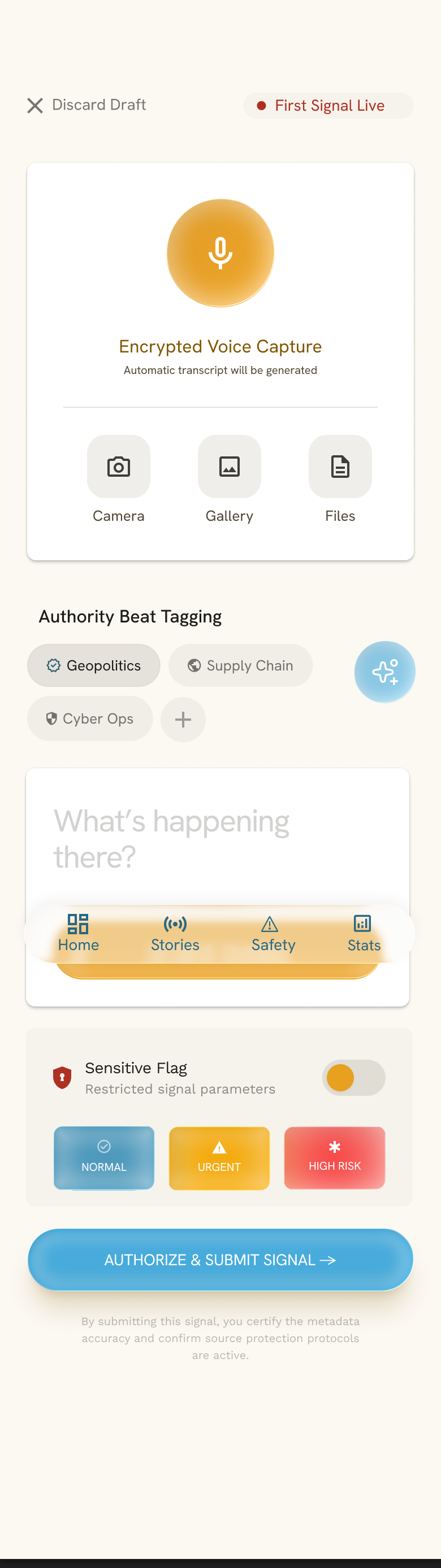
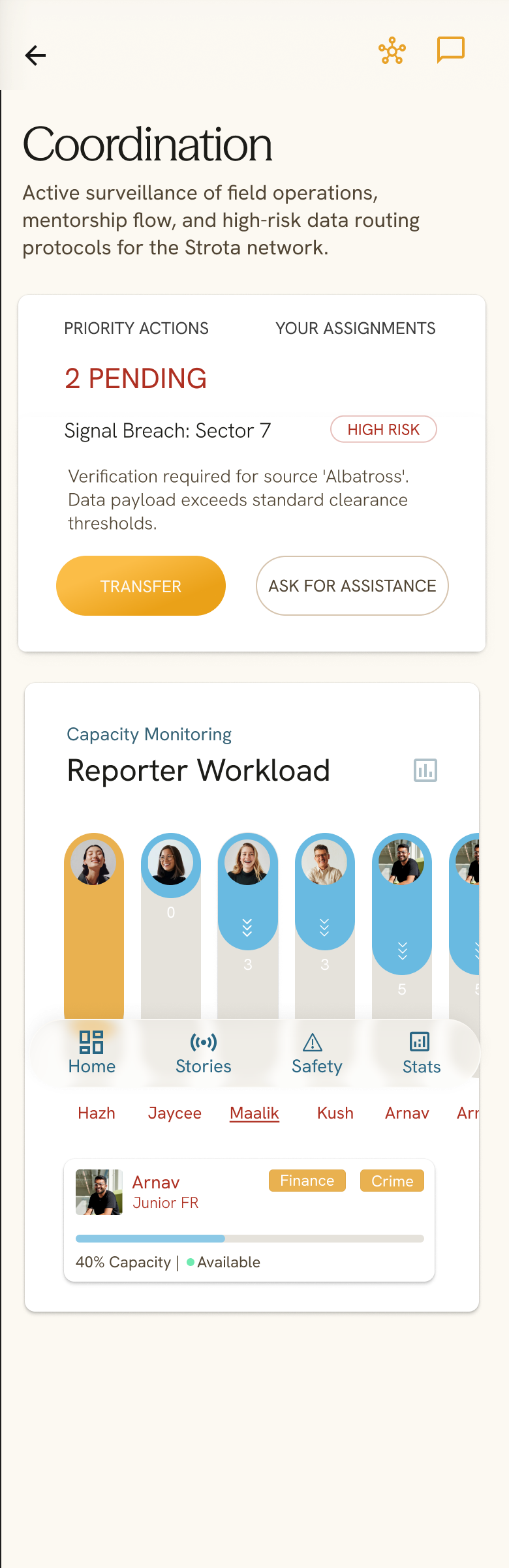
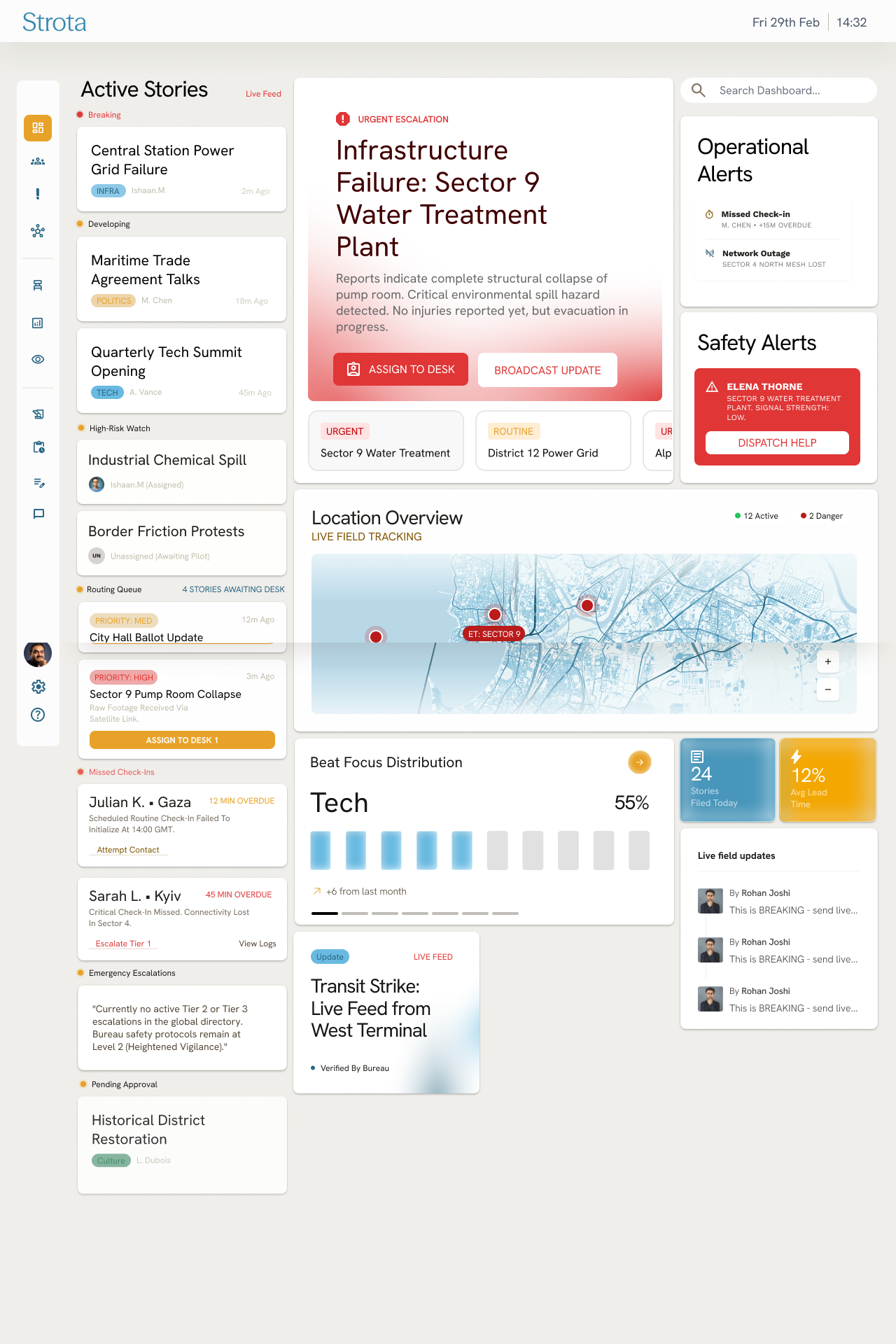
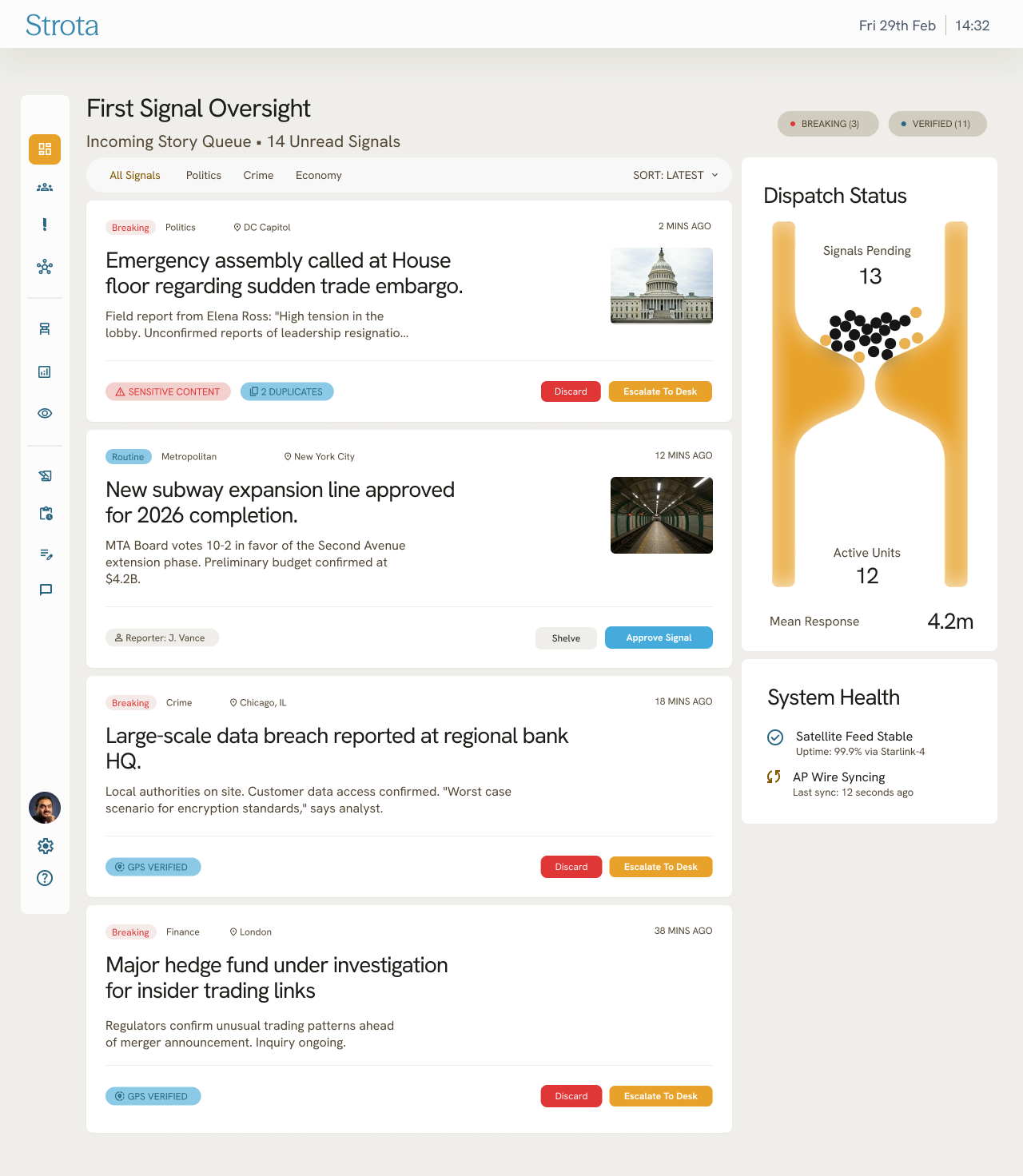
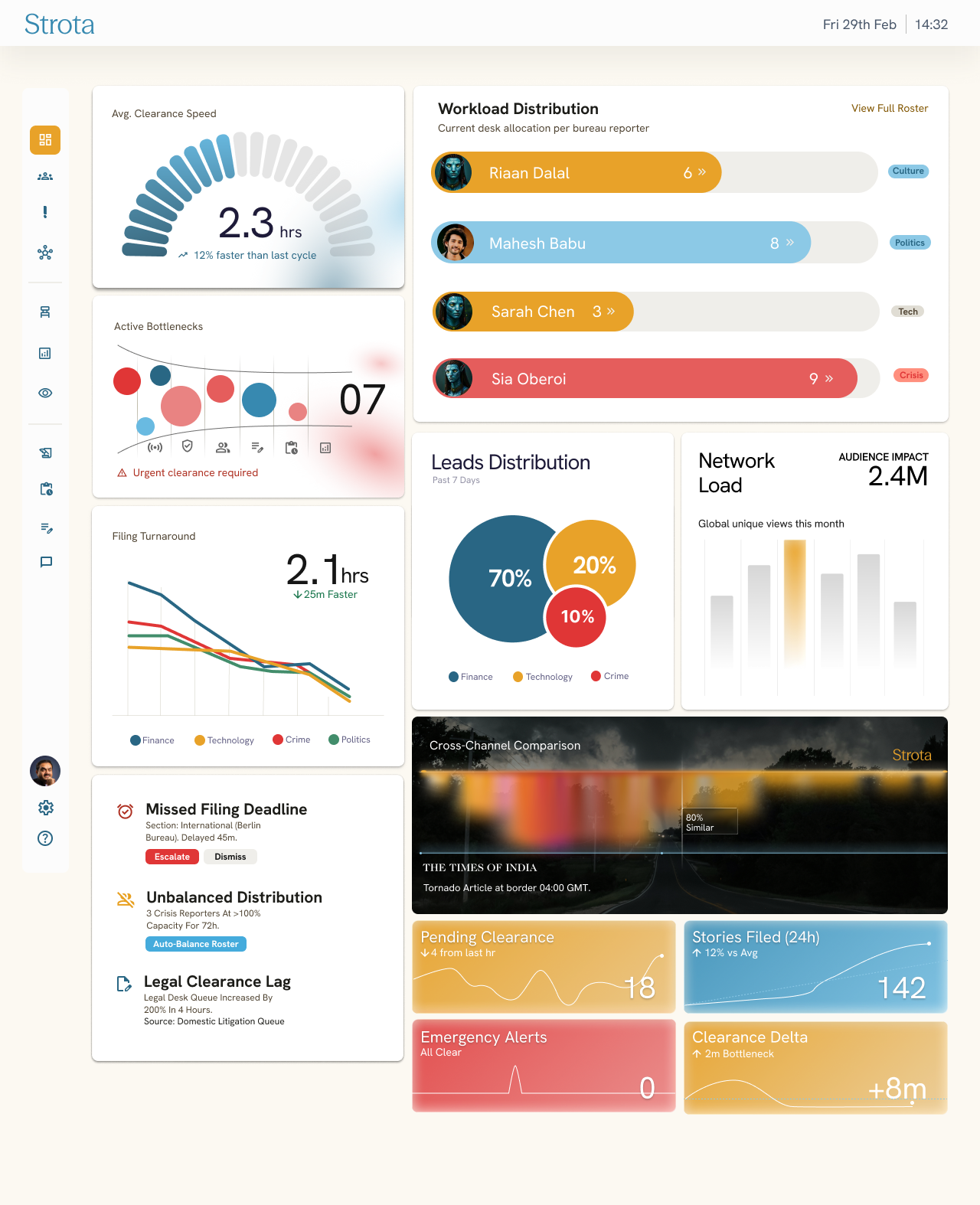
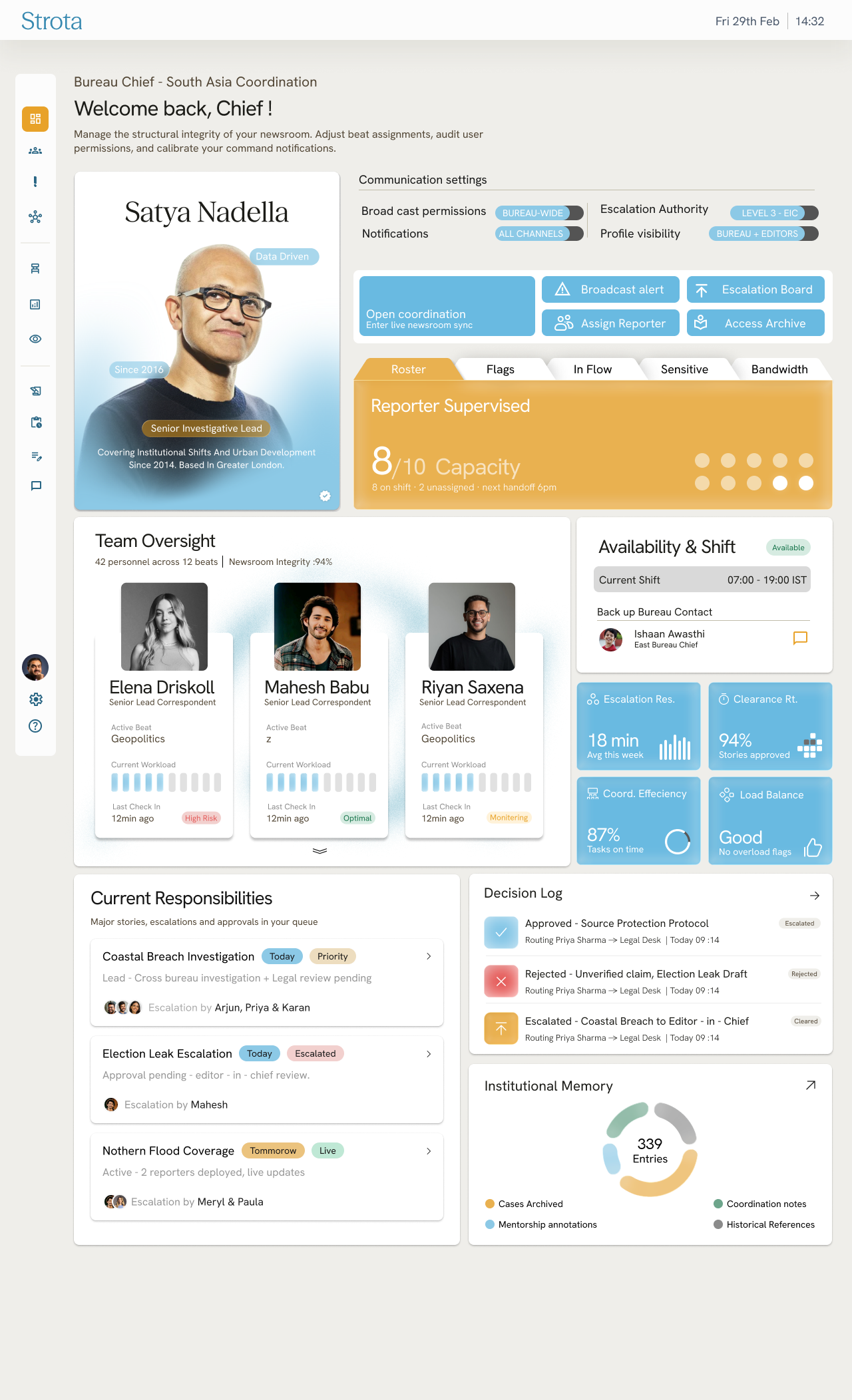
The field surface captures signals. The desk surface is where they become decisions. Four screens carry the bureau chief through a shift — what is happening now, what has just come in, how the desk is holding up, and who is answerable for it.
Each one answers a gap the research named. The intake queue gives a first signal somewhere to land instead of a group chat. The command centre makes the state of the newsroom visible rather than remembered. Roster control puts a name against who acts, and when.


Strota succeeds when coordination feels lighter, visibility feels clearer, and the newsroom no longer depends entirely on invisible human workarounds.
Within pilot teams, and without a mandate
Measurably less time from first field signal to editorial sight
Editors report clearer escalation paths
Fewer incidents of work lost between tools
The system is read as help, not monitoring
A five-person academic team project. Research and synthesis were done collectively; my own contribution was concentrated in interaction design and prototyping. Team: Arnav Chakravarty, Jahnvi Choudhary, Kush Bothra, Melvis Hilton and myself.